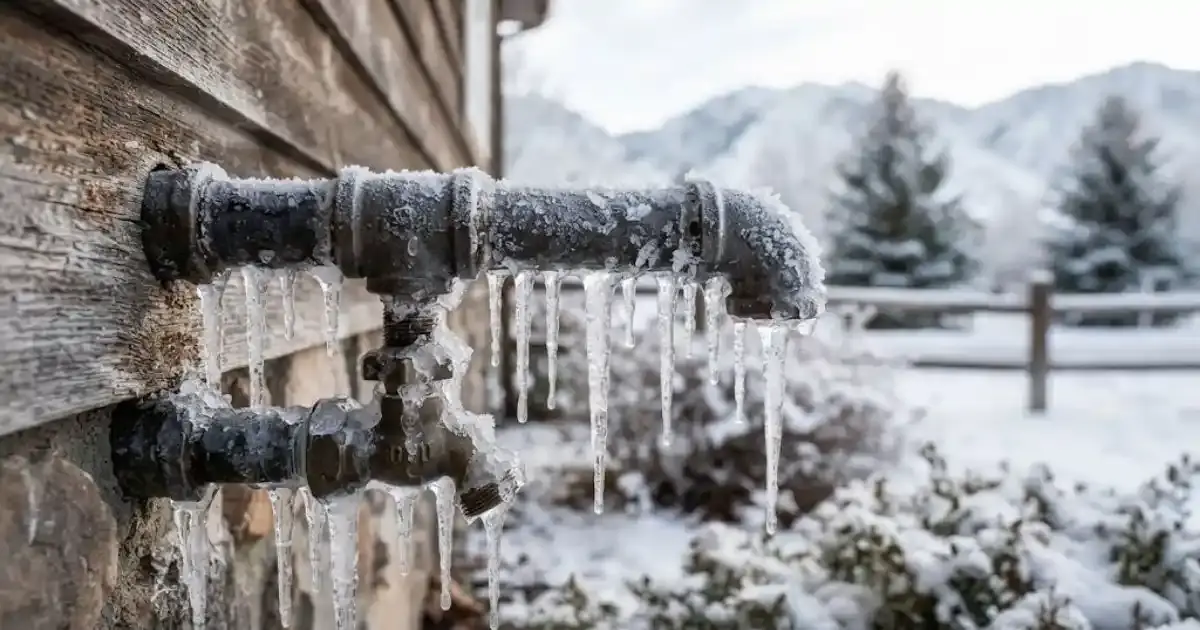
Salt Lake City's coldest temperature ever recorded came on a January night in 1933, when the mercury bottomed out at -30°F. That kind of extreme is rare, but the pattern behind it, a rapid, hard freeze following milder weather, has repeated often enough in Utah's history to make burst pipes one of the most predictable water damage calls we get every winter across West Valley City.
The most striking historical example came in 1979, when bitterly cold arctic air settled over Utah with almost no snow cover to insulate the ground. Frost penetrated as deep as six feet in some areas, and homes and businesses across northern and eastern Utah suffered heavily from frozen water pipes, flooding numerous Salt Lake-area businesses and racking up close to $200,000 in damages, a substantial sum for the time. It's a useful historical marker for exactly the mechanism that still catches homeowners off guard nearly five decades later.
Why The Freeze Itself Isn't The Dangerous Part
Here's the detail that surprises a lot of homeowners: a pipe rarely bursts while it's still frozen. As water inside a pipe turns to ice, it expands and creates intense pressure against the pipe walls, often cracking the pipe at its weakest point while it's still frozen solid. But because the crack is plugged with ice, nothing leaks yet. The real damage starts once the thaw begins and pressurized water finds that crack, sometimes hours or even a day after the cold snap has passed.
That delay is exactly why burst pipe damage often gets discovered well after the coldest part of a storm has ended, a homeowner assumes the danger has passed once temperatures climb back above freezing, only to find standing water the next morning.
What Makes Certain Pipes Fail First
Along the Wasatch Front, winter inversions can trap frigid air in the valley for days at a time, giving pipes in vulnerable locations no chance to recover between cold snaps. The pipes that fail first are almost always in predictable spots:
- Exterior walls with poor insulation — especially in older homes throughout West Valley City's Granger and Hunter districts, where insulation standards reflect construction from decades ago rather than current code.
- Unheated garages and crawlspaces, spaces that see little to no ambient heat from the rest of the home, even when the thermostat inside is set normally.
- Supply lines under sinks against exterior walls, a common vulnerable point regardless of a home's age, since cabinet doors block the ambient room heat that would otherwise help.
Practical Prevention That Actually Works
None of this requires expensive retrofitting. The most effective prevention steps are the simplest:
- Keep the thermostat at a consistent temperature, ideally not below 55°F, even when a home is unoccupied during a cold snap.
- Open cabinet doors under sinks on exterior walls during hard freezes, letting room heat reach the pipes directly.
- Let a faucet run a thin, steady stream from the fixture furthest from the main shutoff during the coldest overnight hours, moving water is far more freeze-resistant than standing water.
- Insulate exposed pipes in garages, crawlspaces, and basements before the first hard freeze of the season, not after.
Why Insurance Coverage Isn't Automatic
Most standard homeowner policies cover a sudden, accidental pipe burst, but carriers can look closely at whether reasonable precautions were taken beforehand — particularly for a vacant or seasonal property left without heat during a known cold snap. A burst that happens despite normal precautions, like maintaining a 55-degree minimum temperature, is generally treated differently from one tied to clear neglect. Documenting the conditions found on arrival, thermostat setting, evidence of prior insulation, and so on, is part of what supports a claim either way, which is exactly why a professional assessment matters even for what looks like a straightforward pipe failure.
If A Pipe Has Already Burst
The single most important step is shutting off the main water valve, every minute water continues flowing adds to the eventual extraction and drying work. Once the water is off, the damage itself is handled like any other water event: extraction, moisture mapping, and structural drying, followed by repair of whatever the water reached. Coordination with a plumber for the pipe repair itself typically runs alongside the water damage work rather than before it, since getting materials drying quickly matters more than having the pipe permanently fixed within the first hour.
If you're dealing with an active burst pipe right now, shutting off the water and calling for extraction takes priority over almost everything else, the 1979 freeze proved that Utah's cold snaps can cause real, costly damage at scale when homes aren't prepared, and the same freeze-thaw mechanics are just as active today as they were then.