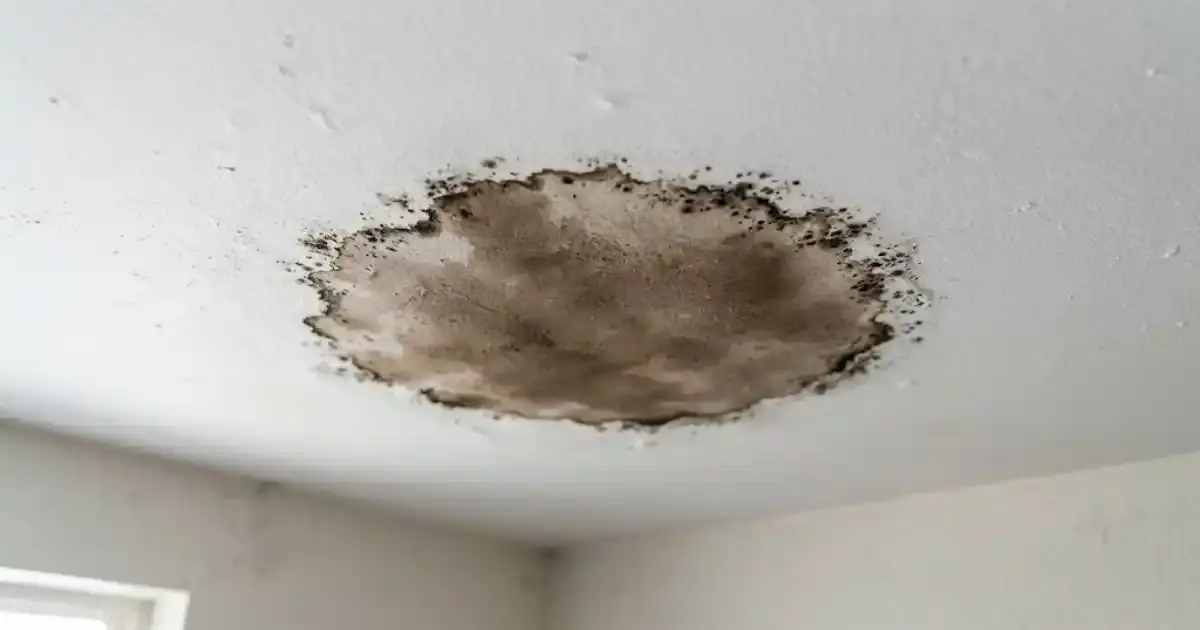
A large share of the calls we get in West Valley City don't start as a mold call or a water damage call, they start as both, on the same visit. A homeowner notices a ceiling stain from an upstairs bathroom leak, and by the time anyone's called for help, mold has already started growing in the same spot. That pattern is common enough that we treat it as the default scenario to check for, not the exception.
Why The Two Problems Travel Together
Mold needs two things to establish itself: a moisture source and enough time. Water damage supplies exactly that. A leak that's been active for even a few days, long enough to go unnoticed behind a wall or above a ceiling, creates ideal conditions for mold to begin growing well before the leak itself is ever discovered. By the time a stain becomes visible enough to prompt a phone call, the mold clock has often already been running for a while.
The upstairs bathroom leak is the single most common version of this pattern we see. A slow leak around a toilet base, a shower pan, or a supply line doesn't always announce itself with an obvious flood — it can drip quietly into the ceiling cavity below for days or weeks, showing up eventually as a soft spot or discoloration on the ceiling of the room underneath. By the time that's visible, there's a reasonable chance mold has already established itself inside the same cavity.
Two Very Different Kinds Of Mold, One Confusing Symptom
Not all mold traces back to a leak. A second, equally common pattern is condensation-driven mold, moisture that builds up from humidity and poor airflow rather than any actual water intrusion. This shows up most often in closets, bathrooms without adequate ventilation, and behind furniture pushed against exterior walls. From a homeowner's perspective, both types can look similar: a dark patch, a musty smell, maybe some discoloration. But they call for genuinely different fixes.
Leak-triggered mold needs the water source found and repaired, plus structural drying, before remediation actually holds. Condensation-triggered mold needs improved ventilation or humidity control, fixing a plumbing issue that doesn't exist won't do anything for mold that's actually caused by a poorly-vented bathroom. Getting this distinction right during the initial inspection is what determines whether remediation is a one-time fix or a problem that quietly returns in a few months.
Why One Call Beats Two
When water damage and mold show up together, treating them as one coordinated job — rather than a water damage crew and a separate mold remediation company, has a practical advantage: whoever assesses the water damage is already looking at exactly the conditions that would tell you whether mold has started, since they're standing in the same wet or previously-wet space. Splitting that into two separate appointments with two different companies means paying for two assessments of essentially the same area, often with less coordination between the two conclusions than if one team handled both from the start.
There's also a documentation advantage worth mentioning for anyone filing an insurance claim. A single, consistent scope of work covering both the water damage and any resulting mold gives an adjuster one clear narrative of cause and effect, rather than two separate reports that may not reference each other clearly. That matters more than it might seem, claims involving mold sometimes face extra scrutiny over whether the mold resulted from a sudden, covered event or from longer-term neglect, and a unified assessment makes that timeline much easier to establish.
This is part of why our mold remediation and ceiling water damage repair services are built to work together rather than as entirely separate lines of business, a ceiling leak call gets checked for mold as standard practice, and a mold call involving a ceiling gets checked for an active or past leak.
What To Do If You're Seeing Both Signs
- Don't wait to see if the stain gets worse. Both the water damage and any mold that's started are actively getting harder to fully resolve the longer they sit.
- Mention both symptoms when you call — the ceiling stain and any musty smell, so the assessment covers both from the start rather than treating them as separate concerns.
- Don't paint over a ceiling stain as a first response. Painting over a stain without addressing the source or checking for mold underneath just delays a more difficult conversation later.
- Ask directly whether the cause is a leak or condensation once an inspection is done, that answer determines whether the fix involves a plumber, a ventilation upgrade, or both.
If you're noticing a ceiling stain, a musty smell, or both, it's worth having it looked at together rather than guessing which problem came first, in our experience, by the time either one is visible enough to notice, there's a good chance the other is already involved.